
Looking Backward: The Campus—Flux and Tension

“Looking Backward” is an occasional feature on TraditionOnline.org in which we resurface and re-explore classic essays from our archives to consider their ongoing relevance for religious life.
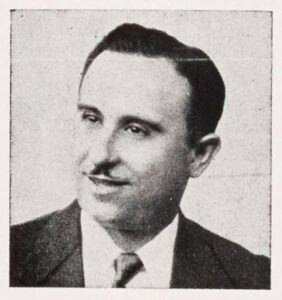
Rabbi Norman E. Frimer
The Jewish situation has two interacting but separate dimensions. One, the “internal” dimension, is how Jews understand and practice their Judaism. The other dimension, the “external,” is the condition of Jews in their larger social and cultural context. Both have undergone significant changes in the last decade or two, but both are still best addressed using principles spelled out by my mentor, colleague, and friend, Rabbi Dr. Norman E. Frimer almost sixty years ago.
Frimer (1916–1993), a member of this journal’s editorial board, held many positions at Hillel, including as international director, headed the Memorial Foundation for Jewish Culture, and served as a professor at Brooklyn College. Writing in TRADITION (“The Campus: Flux and Tension,” Fall 1967), Frimer explored the ways in which the university experience challenges Jewish students, especially those who are observant, and he urged the Orthodox community to prepare its young people better for their confrontation with the ideas and values that they encounter on campus.
The 1960s brought far-reaching changes in American culture, with significant impact on Jewish life. World War II and its immediate aftermath were past, and a new “youth culture” was dawning. To their credit, the young people’s battle cry was not just “Power to Youth.” They had an agenda: Peace and Love and Freedom. It was the age of Woodstock—love, mutual appreciation, individuality, equal rights, openness to the other. Bigotry was increasingly understood as wrong and harmful. Most people cheered when Congress passed laws protecting civil rights.
A related change was a new attitude toward group identity, made explicit and brought to center-stage by the African American community and later among Hispanic people. These groups, and then others with “minority” identities, challenged the expectation that, as part of their Americanization, they would adopt white, Anglo-Saxon, and Protestant styles in a process that Milton M. Gordon, a leading sociologist of acculturation, called “Anglo-conformity.” In time, the “humanism” and “universalism” of the early 20th century were replaced by “multiculturalism” and “diversity.”
That shift opened more space for Jewish distinctiveness, and it came simultaneously with internal developments that motivated Jews to give more attention to the ways in which they were distinctive. Erich Rosenthal’s 1963 American Jewish Year Book article on large increases in intermarriage and Look magazine’s 1964 cover article on “The Vanishing American Jew” concentrated the attention of American Jews on what they already knew from experience—their children were intermarrying at alarming rates, and intermarriage was then still seen by the parents’ generation as usually an exit route from Jewishness. The social scientists who studied Jewish life all delivered the same diagnosis—attenuated Jewish identity inevitably increases rates of intermarriage.
The Jewish community responded (at least initially) with programs designed to generate deeper and broader patterns of Jewish life. For example, day schools and yeshivas grew in number and in normative acceptance; Birkat HaMazon, divrei Torah, and other traditional practices became regular features at communal events; just about every Jewish organization established a committee, a commission, or a task force to recommend how Jewish identity among young Jews could be strengthened; a student demonstration at the 1969 General Assembly of the Council of Jewish Federations and Welfare Funds (now the Jewish Federations of North America) called not for the end of the Vietnam War, as might have been expected then, but for more support of Jewish education; the Association for Jewish Studies came into being, and Jewish Studies courses, programs, and even departments were established all over the academic community; Hillel Foundations and other Jewish student groups grew in number and in activity. Those for whom traditional ways were too traditional created new ways to explore and express their Jewishness; “how to” publications proliferated—sometimes in full book-length form, other times as pamphlets by individual synagogues and Jewish organizations for their members. The Six-Day War—the dread that preceded it and the relief and pride that followed it—also bolstered Jews’ attachment to their Jewishness in the 1960s. The cheering support of Israel that was widely expressed in American society added to the Jews’ comfort with Jewishness.
However, growing alongside was an ideology that attacked the inner core of Jewish commitment. Norman Frimer saw, and later experience confirmed, that radical individualism could well be the biggest threat to robust Jewish identity. A central part of the “modern” outlook is that the sole locus of meaningful existence is the individual person. That notion has grown into an emphasis on autonomy, which in turn has produced an understanding of Jewishness as a “salad bar,” to use a metaphor suggested by Bethamie Horowitz. For the overwhelming majority of today’s American Jews, Jewishness is an array of options from which each Jew can put together whatever combination seems desirable. The Jews who stood together at Sinai with “one heart and one spirit” have become independent iterations of what Arnold M. Eisen and Steven M. Cohen called “the sovereign self.”
In the early 20th century, there were Jews of several types—religious (traditional or liberal), cultural, social, nationalist, communal, philanthropic. Some had feet in multiple camps, but most Jews understood and expressed their Jewishness primarily in one mode or another. Although they differed over what is essential and what is optional in Jewish life, they believed that there was something Jewish—beyond generic goodness—that was essential and, therefore, compelling. If, however, Jewishness means only privileged access to an anthology of materials, then, even if those materials are lovely, Jewishness becomes thin and vulnerable to stronger pulls and pushes.
Recent studies show that the dimensions of Jewishness—faith, traditional practice, learning, attachment to Israel, social contact with other Jews, support of Jewish philanthropy, interest in Jewish literature and arts, attention to Jewish news events, use of the Internet to locate Jewish materials—are all intercorrelated. As sociologists of the Jews put it, “the more, the more.” Deep Jewish commitment is multi-dimensional. Jewishness that is narrow is also shallow. A “salad bar” Jewishness is not likely to give the Jewish “sovereign self” enough Jewish sustenance to journey through today’s typical college campus and emerge Jewishly intact.
Judaism stands opposed to many of the core ideas in the “plausibility structure” currently gripping most of the academic world. Among those sometimes contradictory ideas are radical individualism, universal applicability of oppressor-oppressed relations, a relativism that confers equal validity on all “narratives,” and a secularism that reduces religion to a pretty ornament. Orthodox students, in our day as in Frimer’s, may be more aware of the dissonance than other students, but most are still not adequately prepared to engage their classmates, let alone their professors and—at least equally important—themselves, in examining these ideas critically. Some parts of campus culture should be rejected, other parts are compatible with traditional Jewish perspectives, and still other parts yearn for interpretations of religious texts and contemporary understandings that allow students to live comfortably with both. The education that we give our children in Jewish high schools and in “gap year” programs should prepare them more adequately to engage the current dominant “plausibility structure” on campus from a Jewish perspective.

Pro-Israel student rally, UCLA (courtesy: Daily Bruin)
When a group wants to preserve a way of life different from its cultural surroundings, it has two options. It can guard the points of difference on which it wants to maintain its distinctiveness while allowing, sometimes even encouraging, the practices of the larger culture to which it has no objection. Alternatively, it can isolate itself, both socially and culturally, as much as possible. Historians and sociologists of religion call these responses, respectively, the “church-like” and the “sect-like” approach. “Churches” see themselves as part of their communities, trying to bring those communities closer to religious norms. “Sects” isolate themselves as much as possible from the populations among whom they live in order to protect the norms and practices that set them apart. The conventional analysis used to be that Modern Orthodoxy represents the church-like position and Haredi Orthodoxy manifests the sect-like position, but more recent studies of the Orthodox recognize their greater complexity.
Both the “church”-like and the “sect”-like positions find support in Jewish history and thought. From a traditional Jewish perspective, it cannot be coincidental that the land designated for the Jewish People was, and for more than two millennia remained, exactly in the middle between whatever were then the world’s two great empires and that diaspora Jewish communities have always been concentrated precisely where the most consequential history was happening. If the Jewish People is to be a “blessing to the families of the Earth,” we must be visible and in discourse with our neighbors. On the other hand, we are famously “a people that dwells alone.” Dwelling alone is being different, and it is in our differences that we can be “a kingdom of priests and a holy nation.”
As is usually the case when two opposite principles both have merit, wisdom resides somewhere in the middle. Isolation in a sect-like Jewishness is not an option that most young—or older—Jews will consider. The entrances to the larger society are open and beckoning. The world’s cultures are literally in our pockets, and few will resist the call to explore them. However, though a potpourri of Jewish elements may be enjoyable, it is not likely to be compelling. Kiruv efforts show that a part may be the doorway to the whole, but most people will not forever dally at the threshold. Students need to know how Jewishness fits into their plausibility structures. Frimer, who knew students well, issued a cri de coeur that echoes in our day.
The external dimension of Jewish life has also changed—dramatically and dangerously—in recent decades. The late 20th century was a charmed period for American Jewry. The serious discrimination with which Jews contended in the early part of the century dwindled after World War II. Jews who opened small, self-run businesses now entered big corporations and became CEOs. Jews in the professions became much less likely to be solo practitioners hanging out shingles and waiting for clients or patients to come. Jewish political leaders increasingly reached the highest governmental positions. The Ivy League universities that limited the number of Jewish students earlier in the century all had significant Jewish student bodies, Jewish professors, and even Jewish presidents just a few decades later. The educational, social, and religious opportunities for Jewish students on campuses grew. Even the dramatically rising intermarriage rate had one consoling aspect: Jews were increasingly seen as desirable marriage partners. The late 20th century in America was one of the least antisemitic periods (perhaps the least) in Jewish history.
That changed. Antisemitism has become a serious problem. It has spread throughout the world, reaching even countries in which Jews had come to feel safe and at home. It has also become far more dangerous. The whispered slur has become a megaphoned accusation, criticism has been replaced by condemnation, and swastika-drawing has morphed into murder.
Why now? What happened? Op-eds, commentaries, and posts are filled with theories. Those who think that they would benefit by weakening Israel encourage antisemitic activity, and the institutions which they support allow it. Still, the question remains: Why has it become so pervasive, blatant, and public now? What has changed?
Antisemitism usually grows in a culture of serious discontent, especially when compounded with a feeling of helplessness, and antisemitism is, and always has been, most strident and most violent at the extremes—the religious extremes, the political extremes, and the secular economic policy extremes. The 21st century so far is a period of increasing polarization in politics, in religion, in economics, and in the general mood. Centrist positions, once honored as the guarantor of democracy, are now more often disdained as lacking in conviction. In some ways, universities, which explore the implications of ideas, are especially prone to polarized thinking. Samuel Butler put it well (in Erewhon): “Extremes are alone logical, but they are always absurd.” Polarization and extremism support each other. In turn, they generate conspiracy theories, which lead to scapegoating, often identifying the Jews and the Jewish state as the evil sources of trouble.
What is to be done? First, we need to counteract the effect of antisemitism on our own young people, many of whom come to believe and then repeat the antisemitic canards levelled at the Jews and the Jewish state. We need to give them the factual background and the conceptual context that can be a protective wall against the onslaught they can face on campus.
Then we must fight antisemitism. Our response to any particular situation should depend on the details of that situation, but our primary long-range priority should be directed to the culture. We cannot cure antisemites of the subconscious illness that engenders their antisemitism, and we don’t have the economic and political control (despite what antisemites say) with which to ameliorate the conditions that produce widespread discontent. We need to focus mainly on the culture. Antisemitism declined—or at least went mostly underground—in late 20th century America not because there were no antisemites, but because the dominant mood of the country then was that bigotry of all sorts was dumb, nasty, and not the American way. That idea was fortified by a coalition of minorities and by leading public figures, with the result that antisemites had reason to hesitate about making their antisemitism public. We need now to repeat what worked then. We need to encourage a coalition of groups to fight bigotry. Ideally, it should be enough to fight antisemitism without reference to bigotry against other groups, but evidence shows that putting antisemitism in a larger context of bigotry is much more effective. Also, antisemitism must be shown to be ineffective as a way to solve society’s problems so that serious people will hesitate to present themselves in antisemitic stances for fear of appearing both foolish and bad. All of this must be done, of course, in ways that use the new technology and its ecology of communication.
As Rabbi Frimer eloquently urged, our students should be given the knowledge and the experiences that will strengthen their convictions and their confidence on campus as part of the Jewish People. His guidance is appropriate for every age as a fundamental outlook with which to address Jewry’s changing but constant challenges.
Mervin F. Verbit is chair of the Sociology Department at Touro University. His work focuses on sociology of religion and the American Jewish community.