
REVIEW: The Jewish Experience
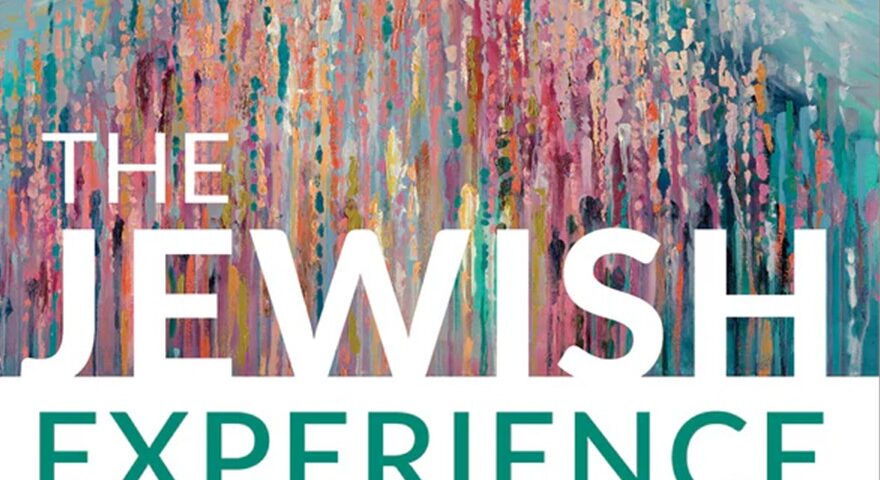
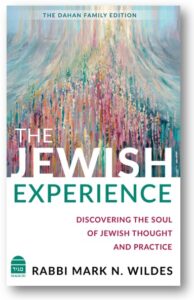
Mark N. Wildes, The Jewish Experience: Discovering the Soul of Jewish Thought and Practice (Maggid Books, 2025), 312 pp.
 The word apologetics is derived from the Greek apologia, meaning “defense.” Though the term often has a negative connotation in Jewish contexts, it ultimately represents, in the words of Christian thinker William Lane Craig, “that branch of theology which seeks to provide a rational justification for the truth claims of … faith” (Reasonable Faith, Crossway Books).
While there are many works of Orthodox Jewish apologetics from the Haredi world, Modern Orthodoxy has lately seen this genre entering our discourse with releases like R Chaim Jachter’s Reason to Believe, Joshua Berman’s Ani Maamin, Samuel Lebens’ A Guide for the Jewish Undecided, Raphael Zarum’s Questioning Belief, and more in the past half-decade alone. Mark N. Wildes’ The Jewish Experience represents the latest release in this trend, but Rabbi Wildes has long contributed to this field in practice if not in publishing, long before the appearance of this one book, .which may be the best example of what a distinctly American Modern Orthodox brand of apologetics could look like.
Having founded the Manhattan Jewish Experience (MJE) in 1998 as “a warm and open community where men and women in their 20s and 30s can explore Jewish life and meet new people,” Wildes has had ample time to witness and experiment with how young, largely secular Jews choose to become halakhically observant in general and identify with Modern Orthodoxy in particular.
Given MJE’s heavy focus on Jews from outside of traditional observance, it may seem like The Jewish Experience has little to offer born and bred Modern Orthodox readers outside of presenting a particular perspective on how to “clarify complicated ideas and articulate why the age-old concepts and practices of Judaism are more essential for our lives today than ever before” to a wide audience. Wildes is quick to clarify, however, that the book “is also for students who went to Jewish schools. It is possible to attend Jewish day school for twelve years, study Torah for a year or two in Israel, and even complete rabbinical school, like I did, and still not learn the reasons behind the mitzvot and the fundamental ideas of Judaism” (xii–xiii).
Clearly, the author is far from the only leader within our community who suffered from an inadequate Jewish education only to make up for it with “learning on the job” in preparation for and during his impressive rabbinic career. In fact, he evidently gets “calls and texts all the time from rabbinic colleagues and educators asking me how I teach about belief in God, how we know the Torah was given at Mount Sinai, why God needs our prayers, or the meaning of Shabbat.” The Jewish Experience also serves as “a ready-made guide to help [such rabbis and teachers] present basic topics of Judaism” (xiii).
God, Shabbat, and Tikkun Olam: Three Case Studies
R. Wildes opens his chapter on belief in God with an acknowledgement of “the limited ability of logic and reason to answer all of life’s questions – including the belief in God.” Therefore, both rational and mystical perspectives “are necessary to give us a window into arguably the most important contribution Judaism has made to the world: the belief in one God” (3). This is framed as the distinction between finding God from without vs. finding God from within. The former involves looking to “external and more objective factors – history and science – which strongly suggest the existence of a supernatural creator” while the latter centers “a more mystical approach, tapping into a spiritual reality the Jewish Sages believe exists within each of us.” We use “both avenues to develop a belief in, and more importantly, an attachment to God” (4).
Wildes’ arguments from without are well-trodden historical and teleological reasonings, which have been offered by many before him across denominations and even religions. Finding God from within is more experiential, assuming that all Jews consciously or subconsciously search for the forgotten Torah of the womb, that Jews “possess a Godly soul, one that is either literally a piece of God Himself or a reflection of God” (27), and that the frustration of our inner soul pushes us towards Jewish exploration. He writes:
“There has to be more to life,” became the tagline on all Manhattan Jewish Experience (MJE) brochures and flyers. The expression captures what so many otherwise happy and successful people feel and confirms what the spiritually sensitive among us intuitively know: We are a composite of body and soul. If we feed the body but ignore the soul, we will feel something significant missing from our lives and, at some point, we will become unhappy. This mysterious feeling of lack burns within, leading many to try different types of physical pleasures, but it is often just the soul crying out to nourish its hunger for spiritual connection (30).
The arguments for God from within that Wildes advances find their bases in sources like the Zohar, the Arizal, R. Moshe Hayyim Luzzatto, and Tanya. Indeed, he considers Kabbalah to be “a critical part of the Oral Torah transmitted by God to Moses designed to give us a more penetrating understanding of the human soul, why God created the universe, and how our actions impact not only our physical world but also the spiritual realms” (85). While such claims or sources are likely a far cry from what many Modern Orthodox educators would expect, it is well-aligned with the growing trend towards Neo-Hasidism within our communities.
[Read sample content from The Jewish Experience at the publisher’s website.]
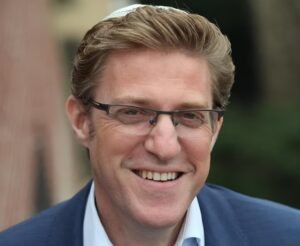
R. Mark Wildes
Shabbat is the practicalization of such belief, Wildes suggests. Channeling Ramban, he explains that in “refraining from engaging in certain activities, we ‘return’ the world to God, reminding ourselves that even when we disengage, the world continues to go on. We thus affirm that God not only created the world but remains involved in human affairs, continually pouring His spiritual energy into the universe” (207). Furthermore, “we need Shabbat for another urgent reason: The sheer volume of technology flooding us day and night demands a technology detox. If we want to properly appreciate the blessings and special people in our lives, Shabbat is essential” (210). From there, Wildes delves into a thorough explanation of Shabbat. Not of the 39 forbidden labors, but what Shabbat observance aesthetically looks and sounds like – preparing for Shabbat during the week, lighting candles, reciting Kiddush, blessing children, singing zemirot, attending synagogue, and the like. Taking a page from the Chabad playbook, he also reminds his readers that “Jewish observance is not an all-or-nothing proposition. So if you’re just starting out, my suggestion is to find something about Shabbat which resonates with you and build from there… Whatever it is you feel inspired to observe, make it consistent so you can build on it and have some Shabbat in your life” (244).
Modern Orthodox readers, particularly Modern Orthodox rabbis and educators, may find themselves frustrated that R. Wildes at no point defines or explicitly mentions the 39 melakhot. Nor does he offer any halakhic reason for why technology or electricity is a halakhic problem on Shabbat, preferring practical and emotional arguments. Wildes’ defense of Shabbat, playing off of Abraham J. Heschel’s metaphors, is framing it as “an island in time” (203). This is a direct nod to Heschel, who Wildes quotes from favorably alongside thinkers such as Rabbis Yitzchak Berkovitz, Shlomo Riskin, Jonathan Sacks, Yosef Yitzchak Schneerson, and Shlomo Wolbe throughout the chapter.
Wildes’ understanding of Shabbat, however, is also an inversion of R. Joseph B. Soloveitchik’s idea that, as cited by R. Sacks, Shabbat is “the thirty-nine avot melakhot… and their derivatives. Any philosophising must begin and end with this point.” Within Wildes’ framing, appreciation for Shabbat is largely treated as transactional rather than revelatory. A technological detox is needed and therefore Shabbat is good as opposed to Shabbat being good and thereby mandating a technological detox. The practical result of Shabbat observance may be the same, but the internal approach is vastly different. This results in an articulation of Shabbat that is pragmatically valuable and emotionally resonant, but not meaningfully halakhic outside a handful of particularly popular actions. While it may certainly be argued that the best way to get people who are new to Judaism to appreciate the halakhic aspects of Shabbat is to first connect them with the above, the lack of reference to any of the day’s prohibitions, beyond carrying and electricity is striking.
Finally, there is Wildes’ approach to Tikkun Olam, or “Jewish Social Justice” (as he defines it) – a value he takes quite seriously:
Although there is no mitzvah per se to fix the world, tikkun olam or bettering the world is a fundamental religious imperative that is expressed throughout the Written and Oral tradition – so much so, that I would call it a meta-ethic in Judaism, an overarching value of Torah. It should not replace or dwarf other parts of Judaism, but it remains a divine mission that the Torah lays out for us to follow (258).
While he notes that it is “unfortunate” that some segments of the Jewish world have in fact allowed tikun olam an outsized place in our religious self-understanding (284 n. 4), Wildes nonetheless affirms that “God purposely created an imperfect world to give us the opportunity to partner with Him in improving that world and helping others – to finish what God began” (270).
He emphasizes that tikun olam ultimately “expresses the prophetic vision that, at the end of days, all of humanity will acknowledge the existence of God” (275) and, because of that, “we are responsible for each other not only in the material realm but also when it comes to another person’s spiritual journey” (276). Further, “we are thus charged to take part in a more spiritual tikkun or fixing – bringing more of God’s presence into the world through the observance of mitzvot” (280) and “embracing only the material component of tikkun olam – of improving the world physically but not spiritually – misses the point” (282). As a meta-value within Judaism, he writes, “what we do to make the world a better place must be consistent with other Jewish values” (281). This lands us at a definition of tikkun olam familiar to those outside of Orthodoxy, albeit aimed towards Orthodox ends.
The Case for Jewish Apologetics
Mark Wildes’ project is surely an “apologetic” one. He is dedicated first and foremost to defending Jewish belief and practice in such a way as to make it most palatable to those who either lack an Orthodox background or have found themselves unable to connect through their upbringings. But returning to Christian apologetics helps sharpen our understanding of his accomplishments. Craig outlined “three vital roles which the discipline of apologetics plays today.” First, apologists “help create and sustain a cultural milieu in which the gospel can be heard as an intellectually viable option for thinking men and women.” Second, they assist in “strengthening believers…. [E]motions will carry a person only so far, and then he’s going to need something more substantive.” Finally, apologists play the role of “evangelizing unbelievers.”
The Jewish Experience accomplishes those three goals, within our Jewish sphere, by contributing to a culture in which such conversation is deemed increasingly important, providing both rational and mystical support for the practices of believers, and reaching out to those who do not yet believe and arguing for them to embrace a life of faith. Craig, like Wildes, acknowledges that ultimately “we must make a distinction between knowing that it is true and showing that it is true.” Like Christian apologetics, lehavdil, Wildes’ brand of Jewish apologetics is one in which “Judaism was never meant to be something we just study, but rather an experience that is lived and celebrated” with it being his “sincere hope this book offers the same” experiential connection to its readers (xviii).
Questions of belief matter, of course, and their answers are important. As Wildes rhetorically asks, “If you lived in a neighborhood with a good public school, which of course is free, would you be willing to spend the approximately $30,000 annual tuition to send your son or daughter to a Jewish school so they can learn teachings invented by people and which are not based on any real events?” (59). Yet, for him, the greatest support of the Torah’s divinity is ultimately that “there is just too much depth and insight into the human condition for such a document to have been created by a single human being or by a group of people, themselves a product of creation” (76) and that the “fulfillment of biblical prophecies such as the return of the Jewish people to Israel and the land’s stunning rebirth indicates that the Torah’s origin is divine” (94) rather than any historical or philosophical argument. Such positions are summarized by Wildes, but clearly play far less of a role for him and those for whom his approach resonates. Belief in God and Torah, observance of Shabbat, and commitment to tikkun olam may have textual, historical, and philosophical bases, but they first and foremost stem from our personal and communal experiences. The rest is commentary.
Therein lies the challenge facing a book like The Jewish Experience and organizations like MJE – an experience, by definition, is not something that can be taught. In order for it to have value, it has to be lived and felt. If someone personally experiences the Torah as a document that contains too much depth and insight to have been a product of humanity, the rebirth of the State of Israel as miraculous, and the warmth and kindness of a Shabbat meal as too good to be true then there are several additional arguments to strengthen their convictions. On the other hand, few of the ideas presented by Wildes will suffice for those who do not already possess a bias towards the Jewish experience. The focus therefore becomes how to cultivate the most emotionally resonant experiences rather than how to formulate the most intellectually compelling arguments.
Some may find that experience in the depth of Torah. Others may find it in Jewish history or support for Israel. Others may simply be attracted to the atmosphere of “Social Orthodoxy.” And yes, every so often, someone might truly connect with a philosophical or theological argument. The Jewish Experience attempts to be a book for those who wish to “begin with a clean slate, to start without any preconceived assumptions we have about Judaism” but, since it is not truly possible for readers to do that it is really aimed at “the part of you [the reader] that seeks answers, that craves purpose and meaning, and feels some connection, however distant, to the Divine” (xv). But clearly, Manhattan Jews being given this book at an MJE event no doubt have pre-conceived notions and experiences coloring their perspectives.
In the context of Christian apologetics, Craig acknowledges that religious beliefs are known to be “self-authenticating” and various arguments are to be employed from there to provide some degree of “intellectual permission to believe.” Indeed, he somewhat begrudgingly admits that only a minority come to belief for intellectual reasons. The primary motivation is their personal experience, which is self-authenticating, rather than any sort of argument.
The same applies to Jewish apologetics, as championed by Wildes, and time will tell whether such an approach can yield lasting commitment to traditional observance as opposed to either short-term religiosity or long-term social Orthodoxy that doesn’t necessarily care for halakhic fealty, per se. In other words, can such an approach retain its “converts” once it becomes apparent that Judaism is not only about feel-good experiences, but also about following particular laws? At some point it becomes clear that belief in God and revelation necessitates 613 mitzvot, that Shabbat entails 39 melakhot and their toladot, and that social justice is important but incapable of trumping the obligation to daven thrice daily. Perhaps by that point, The Jewish Experience’s target audience has also absorbed additional arguments for traditional commitment, but not necessarily. The Jewish Experience fulfills its promise of discovering the soul of Jewish thought and practice in a way that its intended audience will no doubt appreciate. Those who prefer a more intellectual framework may find themselves disappointed, but must ask themselves why it seems to be that proponents of experiential outreach have so much impact. The Jewish Experience is a book on Jewish outreach for our times in which the comfortable warmth of emotional experience almost always eclipses cold (or warm) intellectual rigor.
Steven Gotlib is the Associate Rabbi at Mekor Habracha/Center City Synagogue and Director of the Center City Beit Midrash in Philadelphia.